What Walls Can I Remove In My Home?

The most common remodel questions we get at Complete Building Solutions are regarding the removal of a wall for expansions and making open floor plans. Commonly these inquiries would include walls between the kitchen and the living room to create a great room concept. Homes built in the 1930’s-1970’s typically had 11’x19’ kitchens leaving the cook of the house feeling boxed in and isolated from the rest of the family. In this modern era, we find homeowners looking for a more open floor plan that allows the whole family to interact. Because of this, our phones ring off the hook with questions from realtors, homeowners, and home flippers regarding how to proceed with a wall removal.  Typically, this is our recommendation.
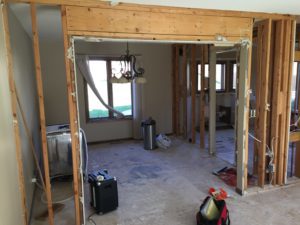
Load-Bearing wall-structural engineering
A load bearing wall

Removing a wall is one of the most common ways homeowners modernize their layout, especially when opening kitchens to living areas or creating a great room. The challenge is that not all walls serve the same purpose. Some walls are purely cosmetic, while others are critical to the structural integrity of the home.

Before removing any wall, the most important question to answer is whether it is load bearing. Getting this wrong can lead to sagging floors, cracked finishes, doors that no longer close properly, and long-term structural damage. This page explains how to determine which walls can be removed, when engineering is required, and what safe wall removal actually involves.

How To Tell If A Wall Can Be Removed

There is no single visual test that definitively proves a wall can be removed, but structural engineers rely on several consistent indicators when making that determination.

A wall may be load bearing if:

  • Floor or ceiling joists run perpendicular to the wall

  • The wall lines up with walls or beams on floors above or below

  • The wall supports a second story or roof structure

  • The wall contains a header or built-up framing

  • The wall sits over a beam, post, or foundation wall in the basement or crawl space

Homes built before the 1980s were often hand framed, meaning loads were transferred through walls more frequently than in newer truss-framed homes. Because framing methods vary widely, especially in older homes, a site inspection is often the only reliable way to confirm whether a wall can be removed.

Do I Need a Structural Engineer to Remove a Wall?

Before you hire a contractor or decide to remove a wall yourself, you must determine if the wall is load bearing. Load bearing walls support or transfer the load of a structure from one area to another. Removing a wall such as this without replacing it with a new form of support can be detrimental to the integrity of the home. Often a new beam & column system will be required to replace the wall. If this is the case, you will need to hire an engineer to design the system and be sure that the new column transfers the load accurately. Depending on where the column sits on the floor, blocking may be necessary. See the diagram below.
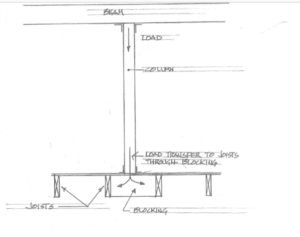
With this said, it is smart to move forward cautiously while removing a non-load bearing wall as well. There are several factors to consider before the wall demolition begins. What heating, air conditioning, ventilation, plumbing, electrical, thermostat or other unknown challenges may be present? These are all questions you can ask Complete Building Solutions.

It is also essential that you check with your city before moving forward with the wall removal and installation of a new support system. Frequently, a permit will be required to proceed with this work. Our engineers can provide you the specifications in obtaining a proper permit. We can help you determine if the wall is in fact load bearing and design a replacement beam and column sealed with an engineer’s stamp for city approval.


Load Bearing vs Non-Load Bearing Walls

Non-load bearing walls divide spaces but do not support structural loads from above. These walls are often removable, but they may still contain:

  • Electrical wiring

  • Plumbing

  • HVAC ductwork

  • Thermostats or control wiring

These systems must be safely rerouted before demolition begins.

Load bearing walls support weight from floors, roofs, or other framing components. Removing a load bearing wall without replacing it with proper support interrupts the load path of the structure, which can cause immediate or gradual failure.

What Happens If a Load Bearing Wall Is Removed Without Support?

Removing a load bearing wall without engineered support is one of the most common causes of structural damage during remodels. The effects may not be immediate but often show up over time.

Common signs of improper wall removal include:

  • Sagging or uneven floors

  • Cracks forming above doorways or windows

  • Drywall cracks along ceilings

  • Doors and windows sticking or going out of square

  • Roof or floor deflection

These issues typically require structural repairs that cost significantly more than proper engineering would have upfront.

Do I Need a Structural Engineer to Remove a Wall?

In most cases involving load bearing walls, the answer is yes. A licensed structural engineer is typically needed when a wall supports floors or roof framing, is being replaced with a beam or columns, requires a city permit, or has multiple stories above it. Building departments often require stamped engineering drawings before approving permits for wall removal. These drawings confirm that the replacement beam, columns, and connections are designed to safely carry the existing loads.

Removing a Load Bearing Wall and Replacing It With a Beam

When a load bearing wall is removed, it is usually replaced with an engineered beam supported by columns or posts. The beam transfers the structural load to specific points that safely carry it down to the foundation. The design of the beam depends on several factors, including the span length, the area it supports, the number of stories above, roof load conditions, and the existing foundation support. Because these conditions vary from home to home, beam sizing and placement must be engineered rather than assumed.

Common Wall Removal Scenarios

Some wall removal projects come up repeatedly during remodels. Removing a wall between the kitchen and living room is common, especially in older homes where the wall runs perpendicular to joists or supports a second floor. Replacing a load bearing wall with columns is another frequent scenario, allowing homeowners to maintain some visual separation while still opening the space. Removing walls in two-story homes almost always requires engineered solutions, as walls on the first floor frequently support loads from above.

Permits, Codes, and Structural Approval

Most municipalities require permits for wall removal when structural framing is affected. This usually involves a structural assessment, engineered drawings, beam and column specifications, and inspection after installation. Skipping this process can create complications during resale, insurance claims, or future renovations.

How Complete Building Solutions Helps

Complete Building Solutions provides on site structural assessments in Minnesota to determine whether a wall is load bearing and what is required to remove it safely. Our engineers design code-compliant beam and column systems and provide sealed drawings for permit approval.

If you are unsure whether a wall in your home can be removed, a professional evaluation is the safest way to protect your home and your investment.

Frequently Asked Questions About Wall Removal

How do I know if a wall can be removed?
The only reliable way to know is to determine whether the wall is load bearing. Engineers look at framing direction, floor alignment above and below, and how loads are transferred through the structure. Visual clues can help, but a site inspection is often required for confirmation.

Do I need a structural engineer to remove a wall?
If the wall is load bearing or if there is uncertainty, a structural engineer is typically required. Most cities also require stamped engineering drawings to approve permits for wall removal involving structural changes.

Can a load bearing wall be removed and replaced with a beam?
Yes. Load bearing walls are commonly replaced with engineered beams supported by columns or posts. The beam size and support locations must be designed based on the loads being carried.

What happens if a load bearing wall is removed without support?
Removing a load bearing wall without proper support can lead to sagging floors, cracked drywall, doors that no longer close properly, and structural failure over time. These issues are often costly to repair.

Can I remove a wall between my kitchen and living room?
In many older homes, the wall between the kitchen and living room is load bearing. An evaluation is needed to determine whether it supports floors or roof framing above.

Is a permit required to remove a wall in my house?
Permits are commonly required when wall removal affects structural framing. Permit requirements vary by city, but engineered drawings are often necessary for approval.

Leave a Reply

Tell Us About Your Project

Fill out this form and our team will reach out to you ASAP.

"*" indicates required fields

Full Name*
We will NEVER share your information with anyone.