Step and horizontal cracking in your home can indicate that your foundation is under stress.
This can be nerve-wracking to a homeowner especially if they are looking to buy or sell.
Before you panic, realize the problem might not be as horrible as you think. This guide will walk you through one example of a foundation with pretty hefty cracks and the simple solutions an engineering firm recommended.
Trust us, these issues are more common than you think.
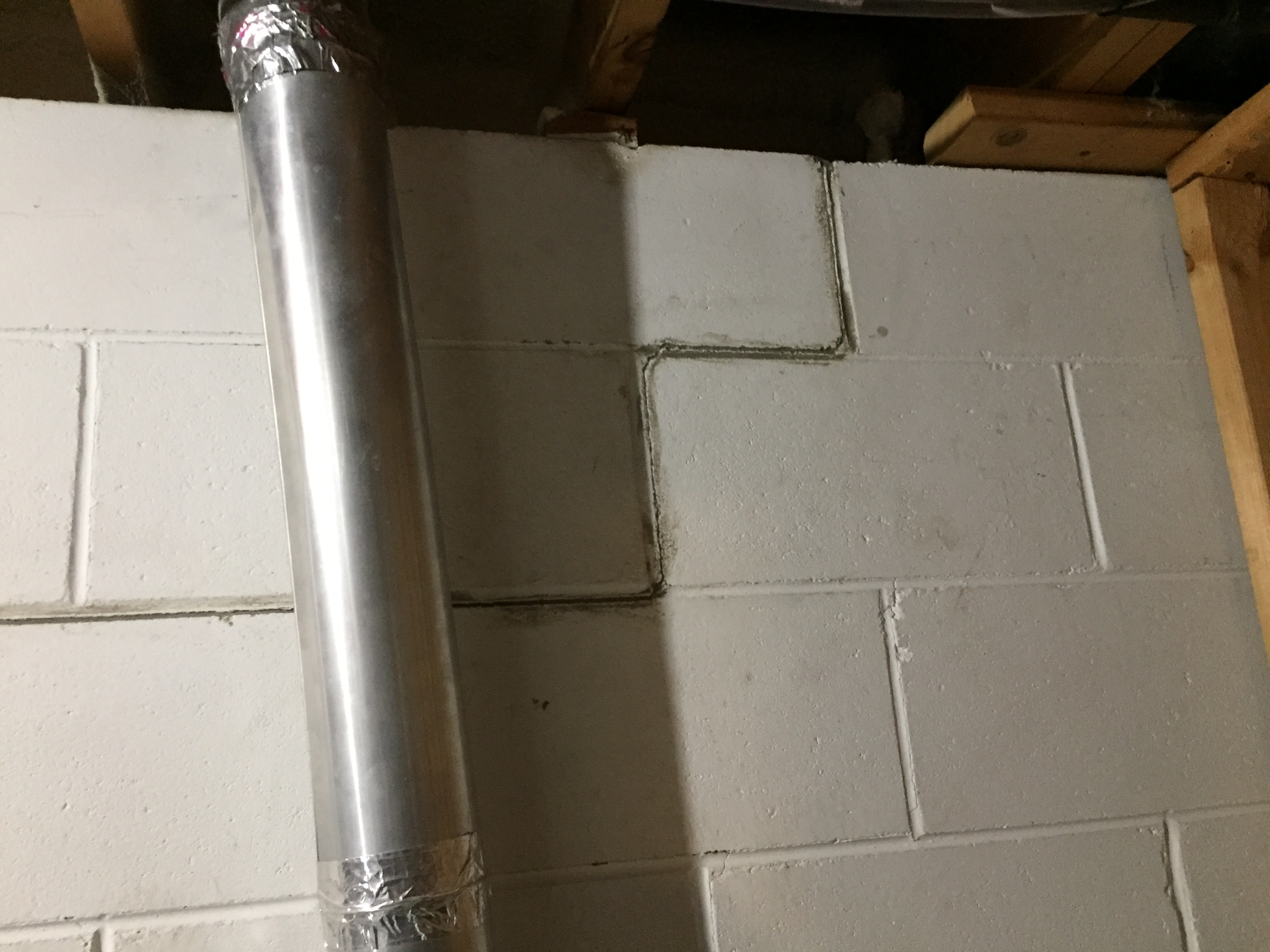
We recently got a call from a homeowner who had noticed cracking in their basement foundation walls and wanted to understand what they were dealing with.
They were understandably worried, the cracks were visible, they weren’t small, and the homeowner wasn’t sure whether they were sitting on a serious structural problem or something more manageable.
We went out to take a look.
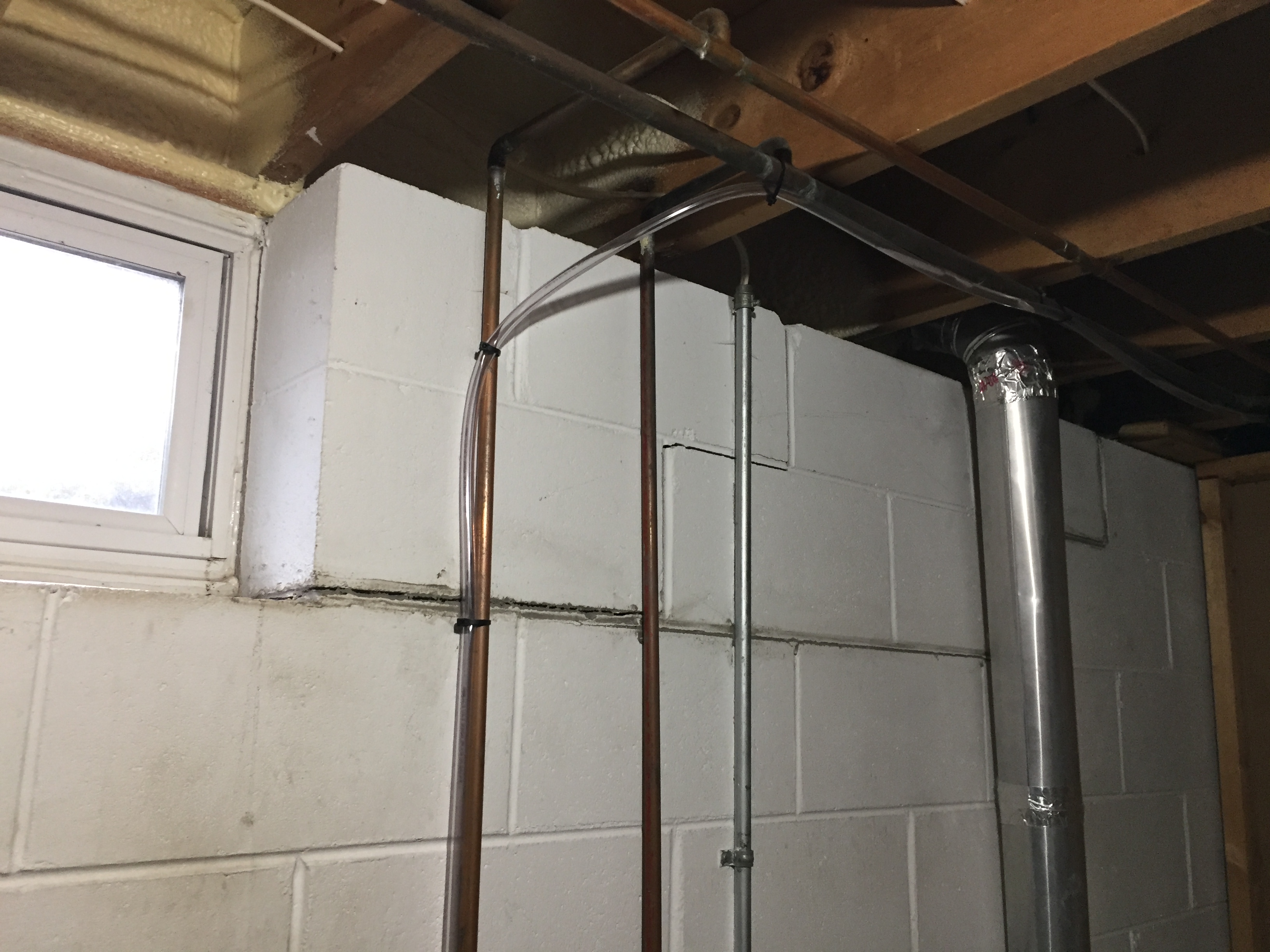
Our engineers inspected both the interior and exterior of the foundation walls and found a combination of step cracking, horizontal cracks, and a slight inward bow, all concentrated in the same section of wall.
On its own, that combination would concern most homeowners.
But the exterior told us what was really going on: the soil along that section of wall had a negative slope, meaning it was directing water toward the foundation rather than away from it.
Every time it rained or snow melted, water was pooling against that wall, saturating the soil, and increasing lateral pressure against the foundation from the outside in.
Over time, that pressure had caused the cracking and bowing we were seeing on the interior.
For more on how wet soils damage foundations over time, see our blog on Water Management and Foundation Damage.
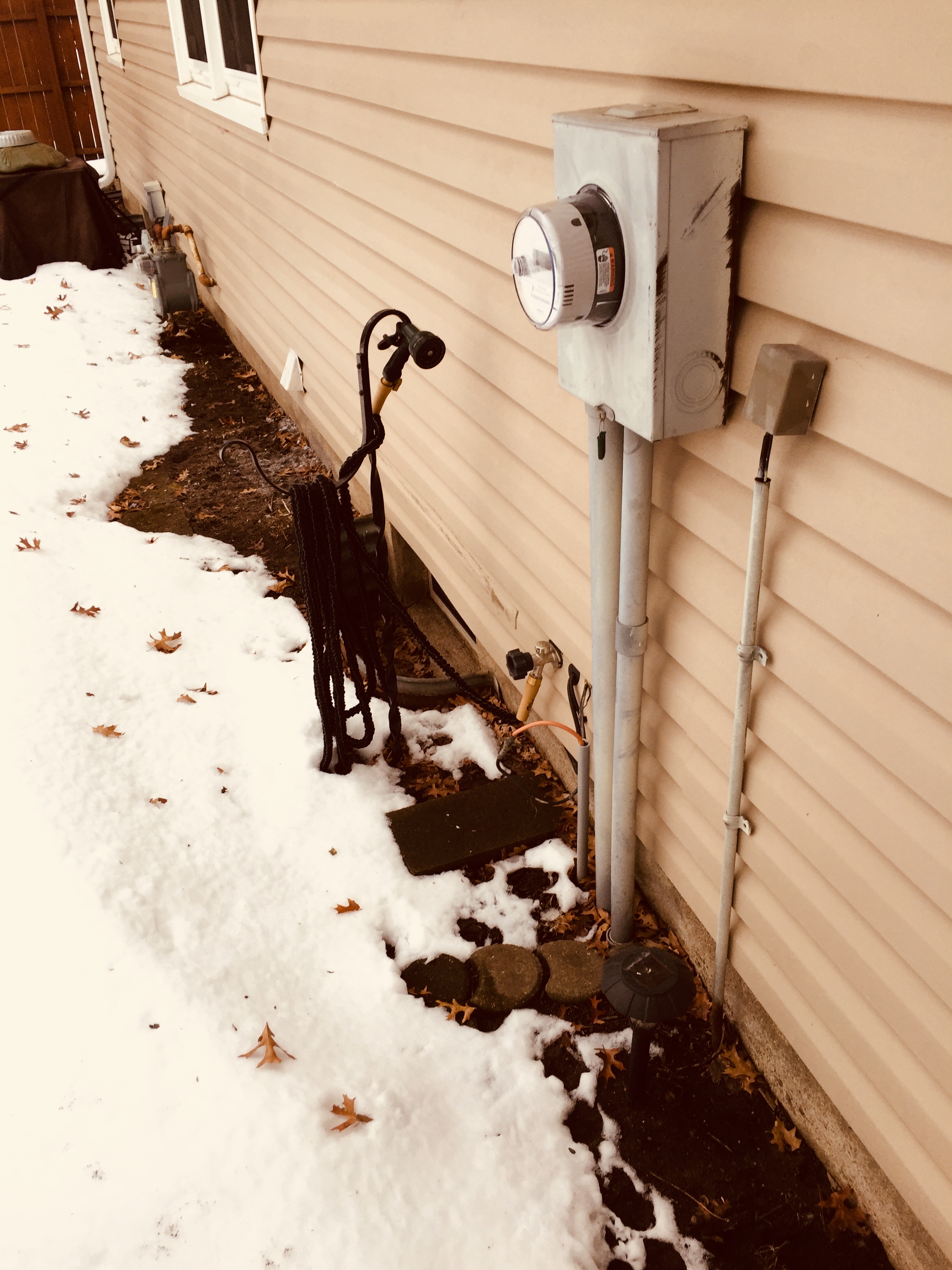
*Negative slope inviting water around the foundation
Despite the significant step cracking, which had understandably alarmed the homeowner, our engineers determined that the foundation was structurally sound.
It was not in immediate danger of failure.
We reached that conclusion by performing a visual inspection, measuring crack widths at multiple points, checking for severe block movement, assessing the degree of wall deflection, and evaluating the drainage, gutters, downspouts, and grading around the affected wall.
Structurally sound, though, doesn’t mean no action needed.
The damage that had occurred needed to be repaired to prevent it from worsening to a point of no return and the drainage problem driving it needed to be corrected alongside any surface repair, or the fix wouldn’t hold.
Our engineers recommended the following scope of work:
- Crack repair: Existing cracks in the block and mortar joints were cleaned of debris and filled with a concrete epoxy (PC Concrete Epoxy) to seal them against water intrusion and stabilize the affected joints.
- Spalled concrete: In areas where small amounts of concrete had deflected off the block face, a concrete mortar mix was used to fill the voids and restore the wall surface.
- Drainage correction: The soil outside the affected wall was regraded to establish a positive slope, a minimum of 5% grade (roughly 6 inches of drop over 10 feet) away from the foundation wall, redirecting water away from the foundation and eliminating the root cause of the pressure that had driven the cracking in the first place.
After the client ordered the repairs, our team returned to observe the completed work.
The craftsmanship was good, the repairs were properly executed, and the foundation was confirmed structurally sound.
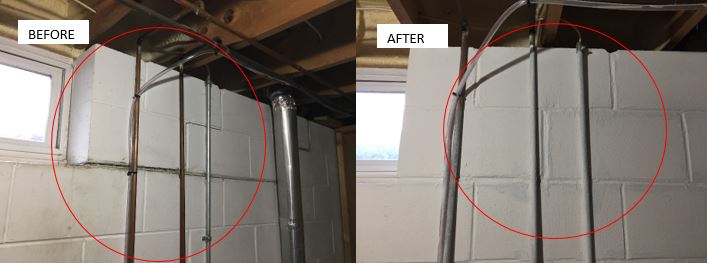
What had looked alarming turned out to be fully repairable with targeted, cost-effective work, once we identified the underlying drainage cause and corrected it alongside the surface repairs.
That’s the value of getting an engineer’s assessment first: you get a factual answer about what you’re actually dealing with, not a worst-case estimate from a contractor whose revenue depends on the size of the repair scope.
Why a Structurally Sound Foundation Is So Important
Your foundation does one job: it transfers the entire weight of your home like the framing, the floors, the roof, everything above it, safely down into the ground. When it does that job well, you never think about it. When it doesn’t, everything above it is at risk.
Here’s why keeping your foundation structurally sound isn’t optional:
It Supports Everything Above It
Every wall, every beam, every ceiling joist, and every roof truss in your home ultimately relies on the foundation beneath it.
A foundation that is shifting, cracking, or bowing doesn’t just have a foundation problem, it creates a chain reaction.
Doors and windows start sticking.
Floors start sloping. Walls start cracking. What begins as a foundation issue can become a whole-home structural issue if left unaddressed long enough.
This is especially true in Minnesota, where clay soils, frost heave, and heavy spring snowmelt put repeated seasonal stress on foundation walls year after year.
A foundation that was structurally sound at construction can be compromised gradually over decades by drainage problems alone, without any dramatic event ever occurring.
For more on how drainage affects your foundation, see our guide on Ground Water Management.

It Protects Your Home’s Value
For most homeowners, their home is their largest financial asset.
A foundation with unresolved structural issues doesn’t just create a safety concern, it creates a disclosure obligation and a significant negotiating liability in any real estate transaction.
Buyers’ inspectors flag foundation cracks.
Lenders sometimes require engineering reports before approving financing.
And repair estimates, even when the actual fix is straightforward, can cause deals to fall apart if there’s no professional documentation of the foundation’s actual condition.
Getting a structural assessment before listing or before making an offer, puts factual, engineer-backed information in your hands rather than leaving it to speculation.
See how we support real estate transactions specifically.
It Keeps Water Out
A cracked or bowing foundation wall is an open invitation for water intrusion.
Even cracks that seem minor on the surface can allow moisture to seep through, leading to basement dampness, mold, efflorescence (white mineral deposits on walls), and in severe cases, active water intrusion into living or storage spaces.
The relationship between foundation integrity and drainage is inseparable.
In most cases we see, the foundation problem and the drainage problem are the same problem, water is getting where it shouldn’t, and the foundation is showing the evidence.
Addressing both together is the only durable fix.
Our french drain and ground water management resources cover the drainage side of this in detail.
It Determines What You Can Do With Your Home
Planning a remodel?
Adding a second story?
Removing a load-bearing wall?
Every one of these projects starts with the foundation.
A structural engineer needs to know that the existing foundation can handle any additional loads before any modification above it is designed or permitted.
A foundation with unresolved issues can put a hard stop on remodeling plans or require foundation repair as a prerequisite before any above grade work begins.
Learn more about how foundation condition affects remodeling and structural plan detailing.

It Affects Your Insurance Claim Options
If your home has experienced storm damage, flooding, a fallen tree, or another insurable event, the condition of your foundation at the time of the claim matters.
A structurally sound, well-documented foundation makes the claims process cleaner.
A foundation with pre-existing unresolved issues can complicate or reduce your claim.
Complete Building Solutions assists homeowners through the insurance claim process as an unbiased third-party structural engineering firm.
What to Do If You Think Your Foundation Has a Problem
If you’re seeing cracks, bowing, sticking doors, sloping floors, or water intrusion in your basement, here’s the right sequence:
- Don’t ignore it. Foundation issues are almost always cheaper to address early than after they’ve had time to worsen.
- Document what you see. Photograph cracks and mark their ends with a pencil and date. If they grow, you have evidence.
- Get a structural engineering assessment – not just a home inspection, and not just a quote from a foundation repair contractor. An engineer’s assessment is unbiased and gives you the full picture before you commit to any repair scope.
- Address drainage alongside any structural repair. If water is involved, and it almost always is, fixing the surface without fixing the drainage is a temporary solution.
Schedule a Foundation Assessment with Complete Building Solutions
Or call us at 763-265-7984


